Science Comes Alive: A Day of Discovery, Wonder & Hands-On Exploration
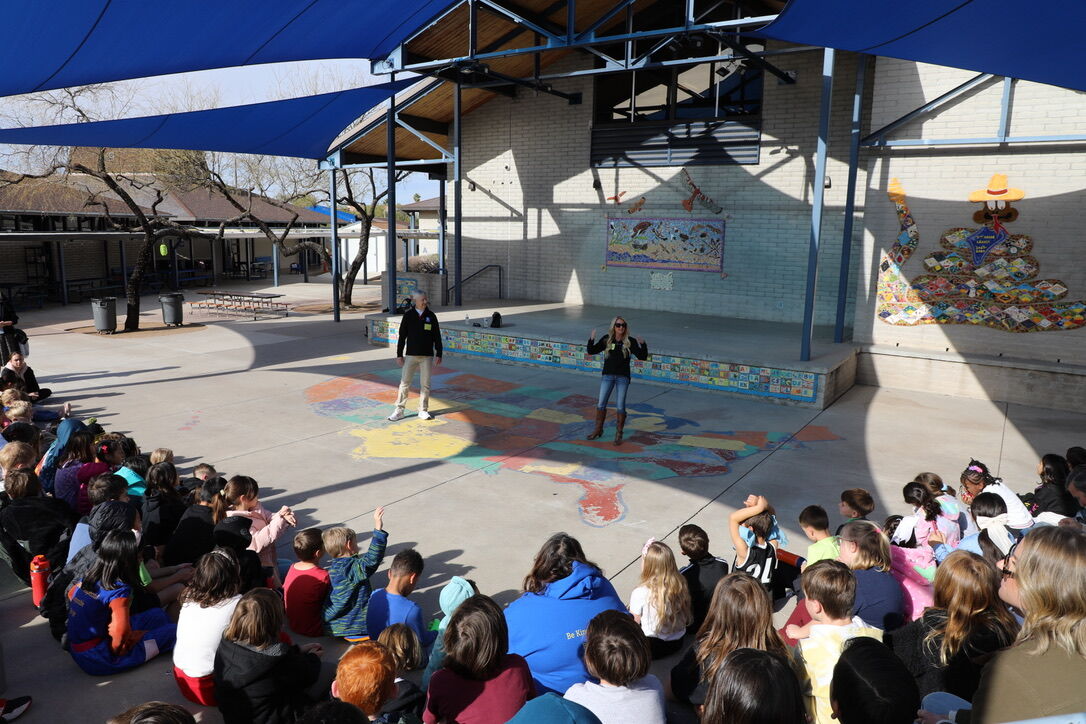
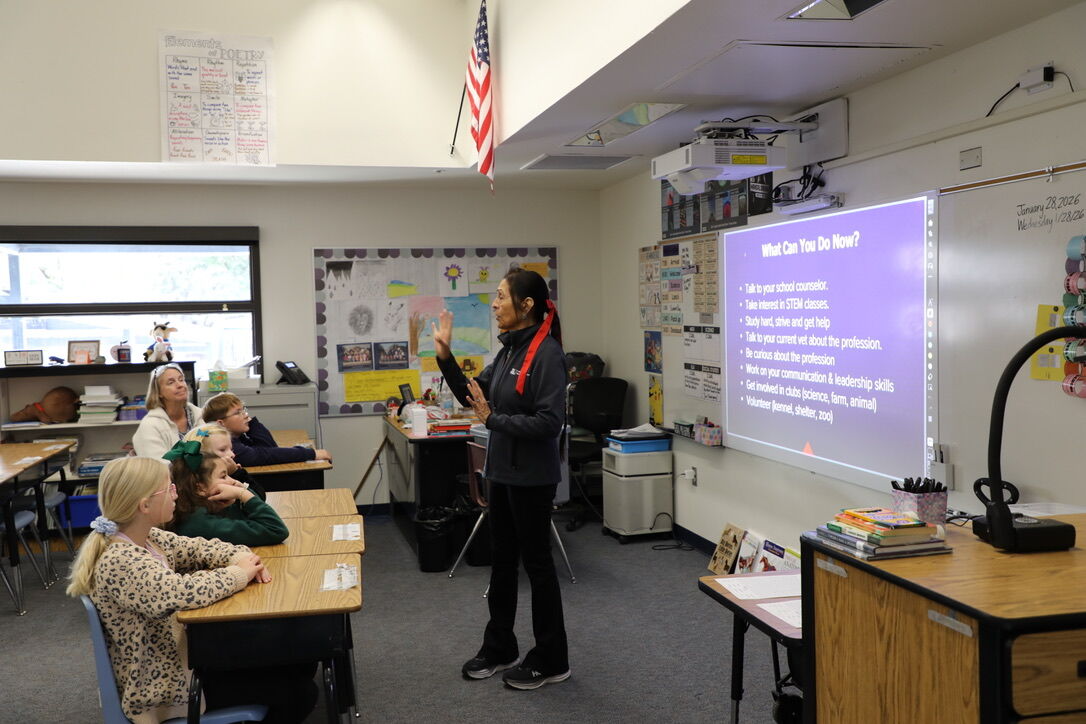
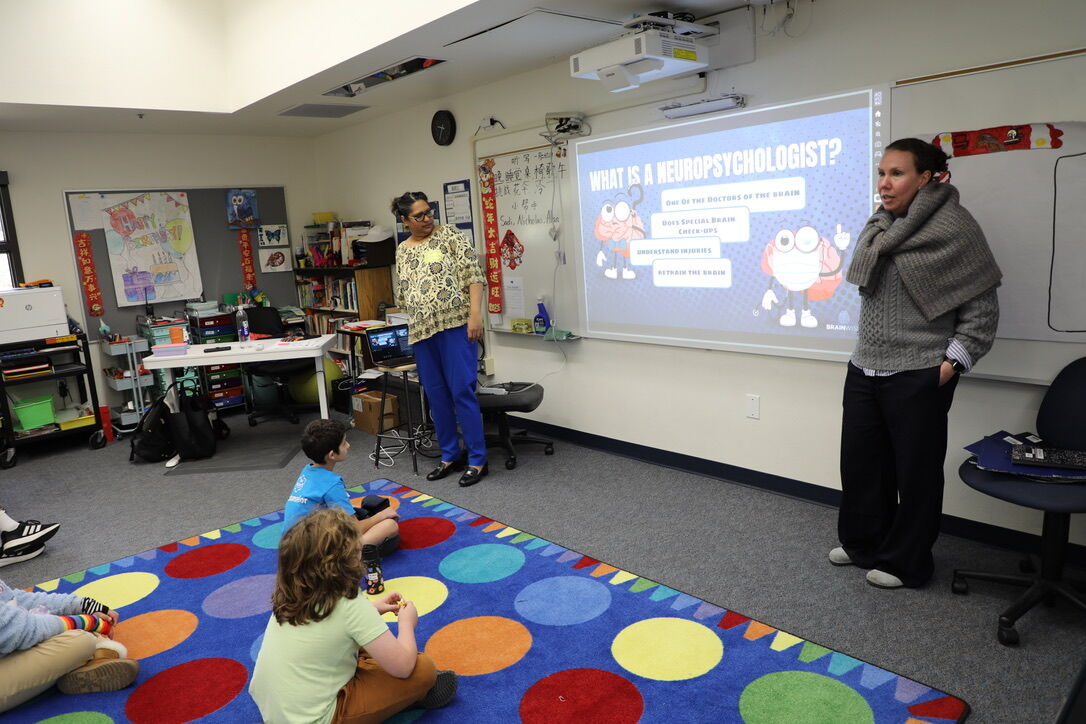
 Recently at Sunrise Drive, the campus transformed into a hands-on science laboratory where students didn't just learn about STEM; they experienced it. Science Day, organized by parent leaders Samira Jean-Louis, Paloma Lazaro, and Mitchell Zischke, brought together more than 20 experts from across Southern Arizona to spark curiosity, challenge assumptions, and demonstrate that science is far more than textbooks and equations.
Bridging the Gap Between Expertise and Curiosity
For Dr. Jean-Louis, who has led Science Day planning for six years, the event is about more than a single day of activities.
"My main goal has always been to bridge the gap between high-level scientific expertise and community involvement," Dr. Jean-Louis explained. "By showing and demonstrating intricate concepts into accessible, hands-on experiences, the aim is to demystify the scientific method, empower the next generation, and help them develop scientific curiosity."
That vision came to life as students moved between more than 20 stations covering everything from astronomy to molecular biology, from mining engineering to service dog training.
Journey to the Stars
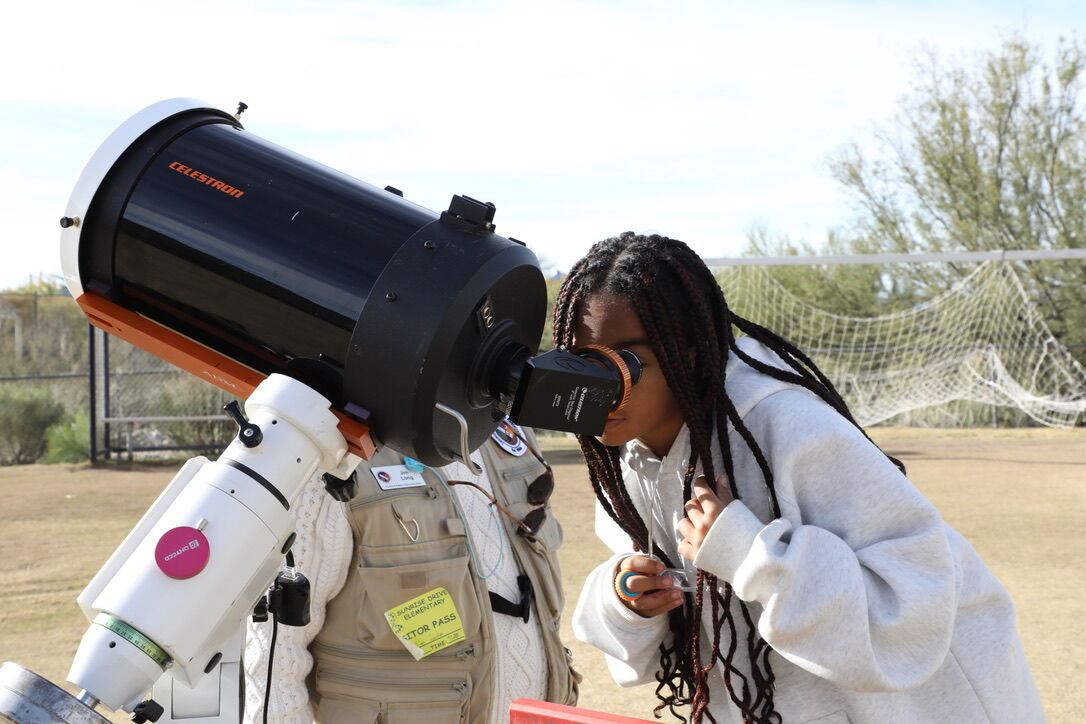
Students wrestling with brain-teasing math discovered just how vast the universe truly is during the Astronomy/Stargazing presentation. One presenter posed a question: If Voyager 1, launched 49 years ago and traveling at 38,000 miles per hour, has gone so far that light takes 24 hours to reach it from Earth, how long would it take to reach the closest star?
"How many say more than 50 years?" the presenter asked as hands shot up. "More than 100? 200? 500?"
The answer stopped students in their tracks: 78,000 years, and Voyager isn't even pointed at the closest star. It's simply traveling into the vast unknown, potentially wandering the Milky Way for a billion years before encountering anything.
This wasn't abstract astronomy. It was a lesson in scale, time, and the sheer magnitude of space exploration. Students left understanding that the universe operates on timescales and distances almost impossible to comprehend, and that's what makes it fascinating.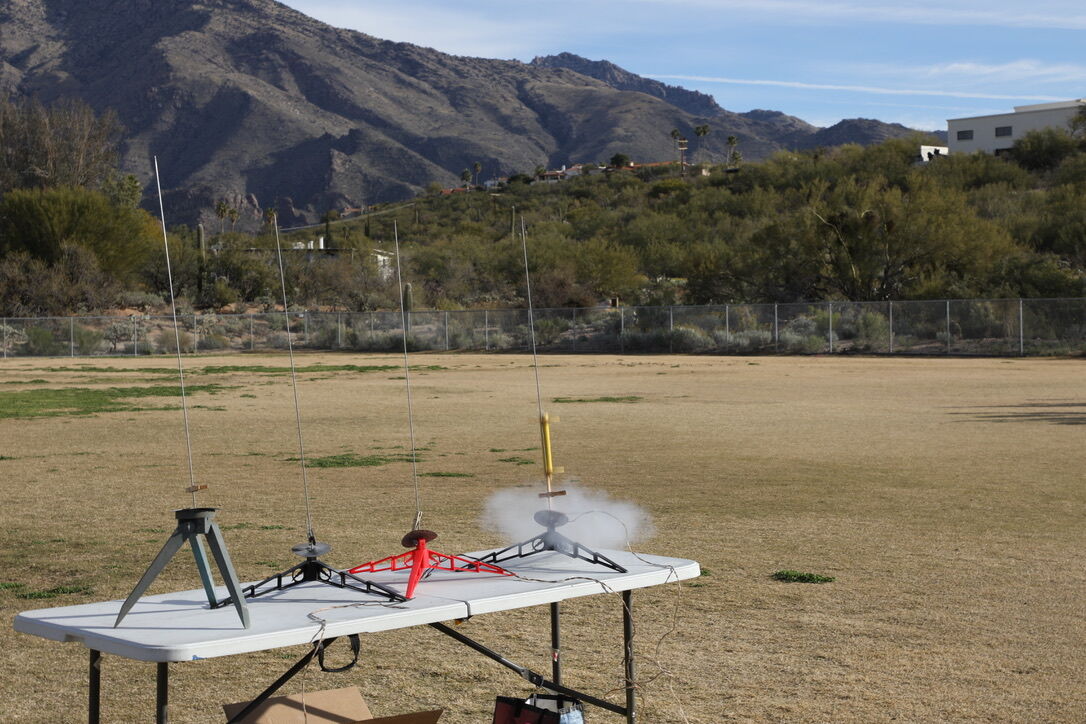 Launching into Physics
Outside, SARA Rocketry volunteers demonstrated the fundamental physics of propulsion, drag, and stability. Students watched as rockets of increasing power lifted off from launch pads, each flight teaching a different lesson.
"Why do I put fins on my rocket?" the presenter asked, holding up a model. Students called out: "Stability!" The fins act like weather vanes, keeping the rocket pointed in the right direction.
As rockets climbed higher and higher, students learned about drag—the force of air resistance pushing back. "If you've ever put your hand out the window of your parents' car, you feel something pushing back," the presenter explained. "The faster you go, the more drag you feel. And if you go twice as fast, you have four times as much drag."
One rocket, equipped with twice the engine power, soared dramatically higher than the first. Another, called "the spool," looked nothing like a traditional rocket but flew beautifully nonetheless, demonstrating that engineering isn't always about following conventional designs.
The most important question came at the end: "Is drag always bad?"
Students noticed that rockets without parachutes still came down slowly. "Drag is good if you want to slow down," the presenter explained. "That's why parachutes have lots of drag—to slow you down safely."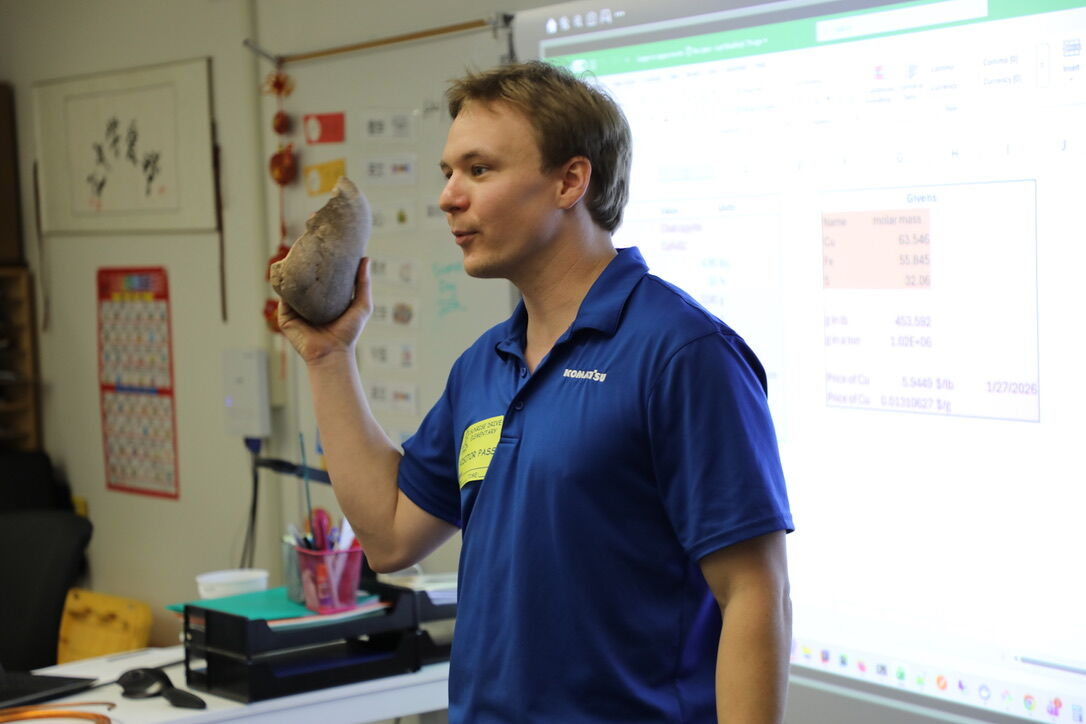 Mining for Understanding
In the Copper Smelting session, Kyle Everly (our own Melissa Everly's son!) helped students explore the massive scale of modern mining operations. They learned the difference between underground mining, sometimes with tunnels reaching thousands of feet below the surface, and open-pit mining, where engineers essentially "take the roof off" to access ore more efficiently.
Holding up a five-pound rock, the presenter asked: "How much copper do you think would be in here if it were copper ore?"
Students guessed three pounds, maybe five. The answer? 77 grams—worth about one dollar.
"In order to make any use out of this, we need to move a lot of rocks," the presenter explained. "That's why we need really big equipment."
Students left understanding that modern mining and smelting aren't just about digging up rocks. It's about engineering, chemistry, mathematics, economics, and environmental stewardship all working together.
Canine Companions: Science Meets Service
Perhaps the most heartwarming presentation came from the U of A Collar Scholar Club, where Hatcher and Bryant introduced students to Shelly and Honor, two golden retrievers just weeks away from their first birthday.
"We raise dogs for people with disabilities for free, so that people can afford to have a service dog that helps them live their life," the presenters explained. Students learned about the rigorous training process, appropriate ways to interact with service dogs, and the life-changing impact these animals have on people who need them.
Two of Collar Scholars' dogs are currently in professional training and will soon be placed with individuals whose lives they'll help. The combination of animal science, behavioral psychology, and compassionate service demonstrated that STEM careers don't always involve laboratories and machines.
|
|
|
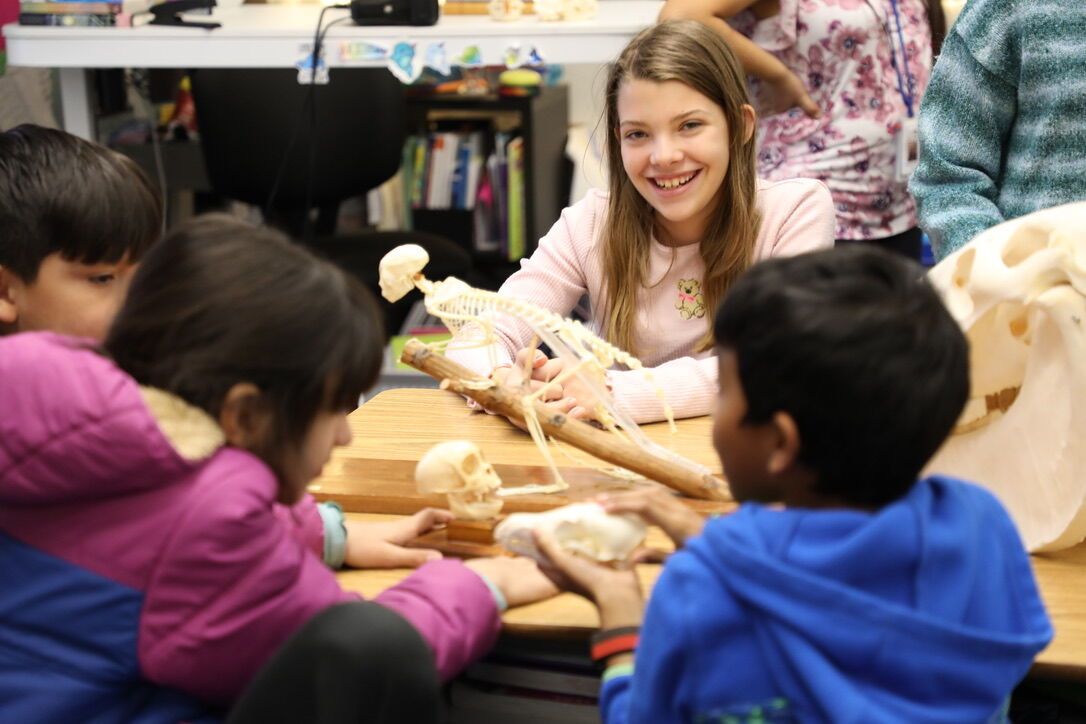
A Campus-Wide Science Celebration
Throughout the day, students rotated through an extraordinary array of hands-on science experiences:
Life Sciences:
- U of A Veterinary Medicine with Alberto Arviso exploring animal health and care
- Entomology experts teaching about native bees and insect species
- U of A Fish Museum showcasing aquatic biodiversity
- U of A Biology with Ryan Ruboyianes demonstrating biological principles
- Molecular Biology with Jenna Souvlie exploring the building blocks of life
- Genetics with Alan Cervantes-Perez unlocking the secrets of DNA
- Psychiatry with Dr. Sutapa Dube and Dana Princiotta discussing mental health and brain science
- Pediatrics with Dr. Nancy Chen running a Mini Doctor Exam Zone where students practiced medical skills
- U of A Geosciences exploring rocks, minerals, and Earth's history
- Environmental Science with Lindsey Bunting, investigating ecosystems and sustainability
- Pima County Environmental Quality with Karen Wilhemsen teaching about water, air quality, and conservation
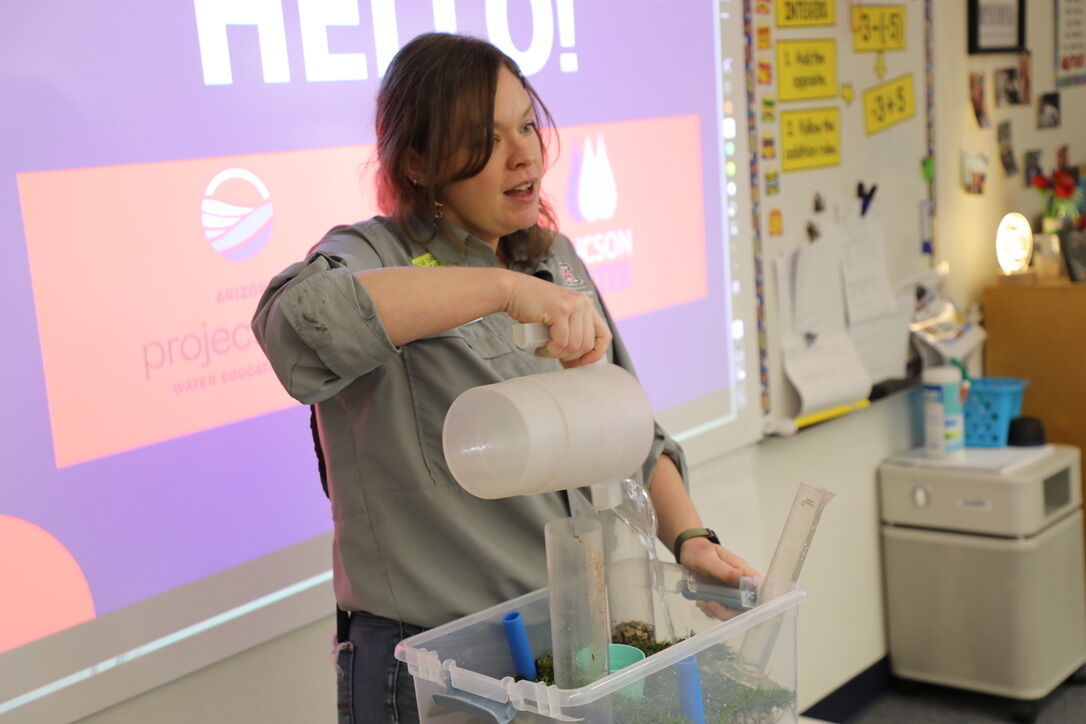
- AZ Project WET demonstrating the science of water resources
- KGUN9 Meteorology with April Madison and Cuyler Diggs explaining weather forecasting and atmospheric science
- Tucson Electric Power with Jamie Carpenter exploring energy generation and electrical systems
- Robotics with Ms. Ackerman from CFHS demonstrating coding, engineering design, and competitive robotics
|
|
|
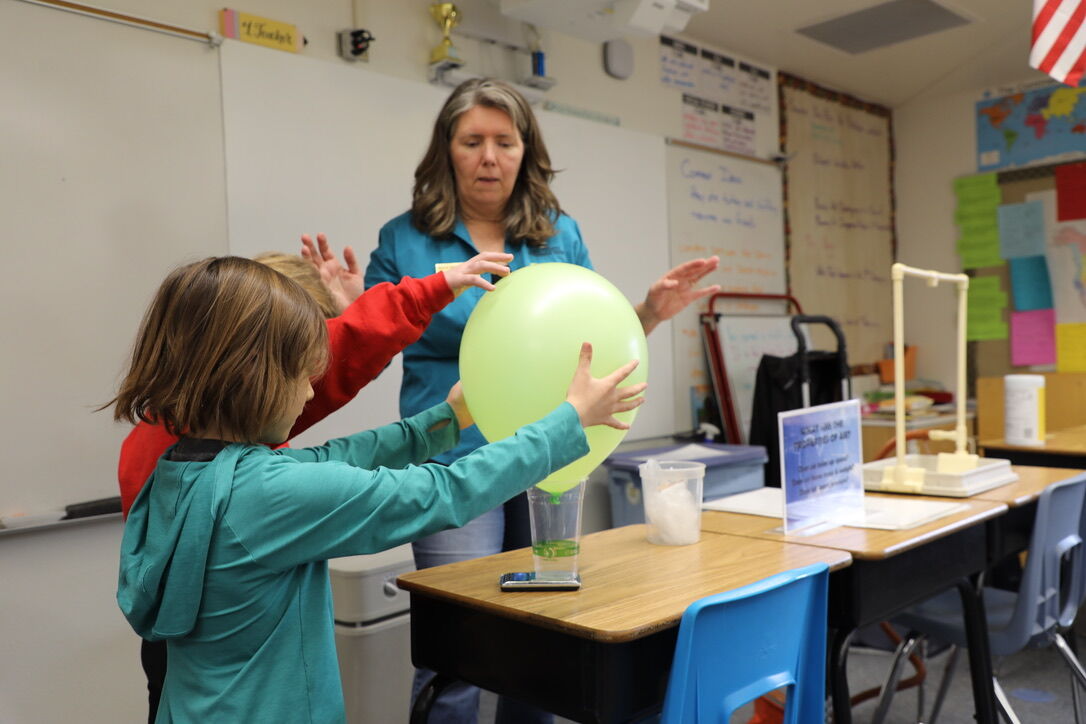
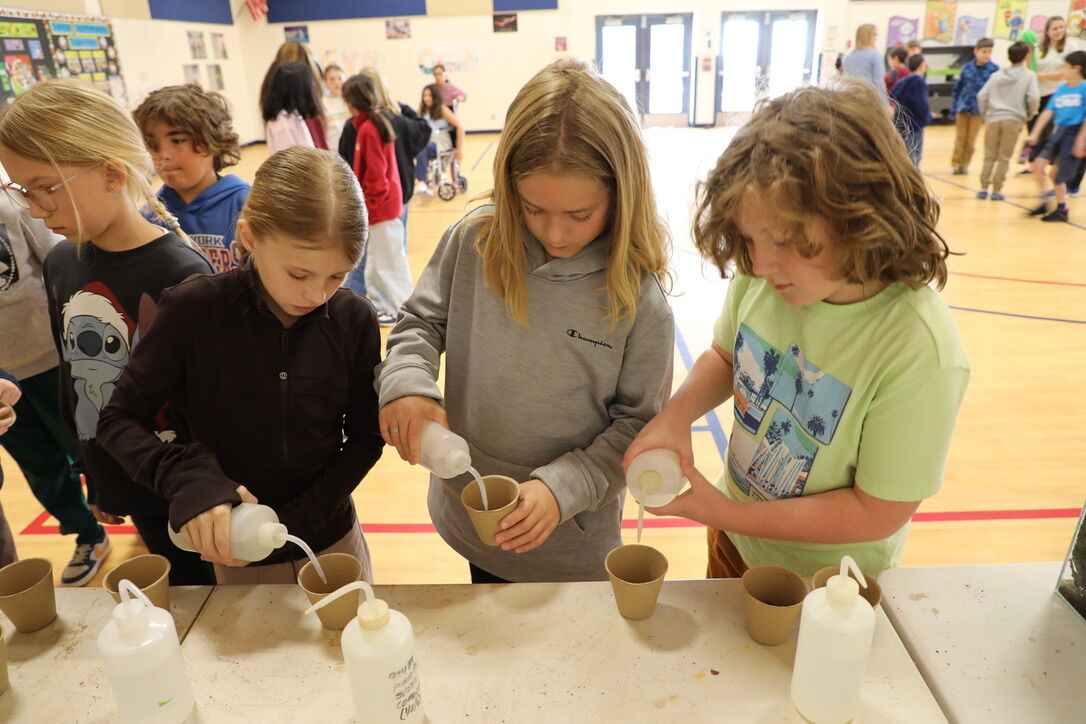
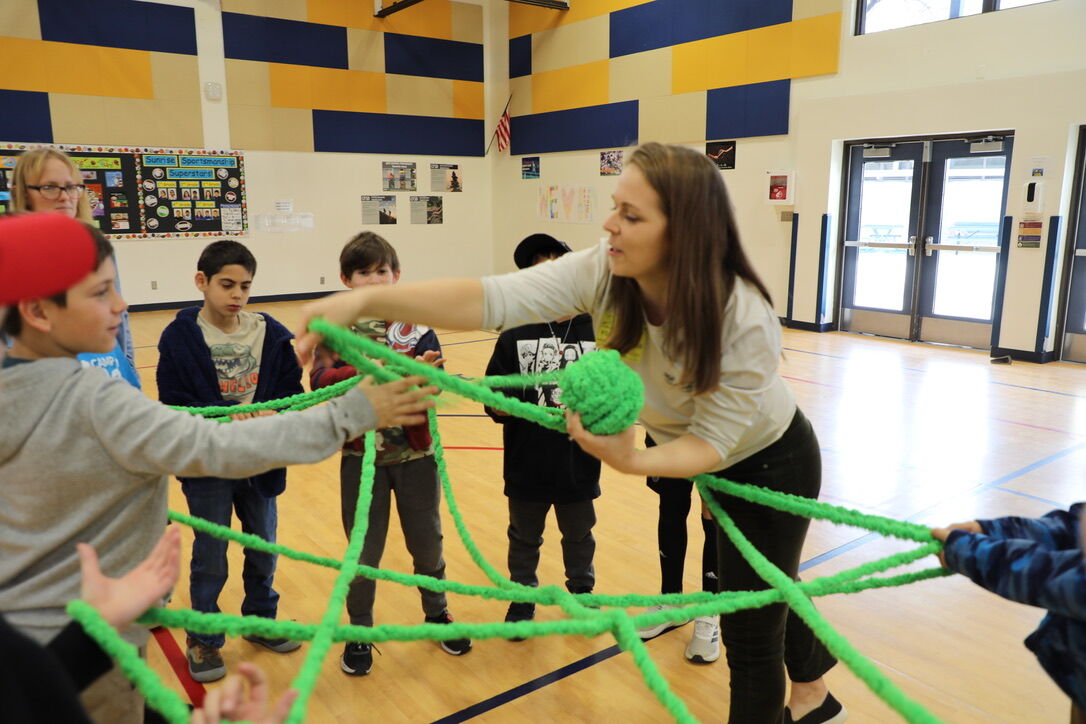
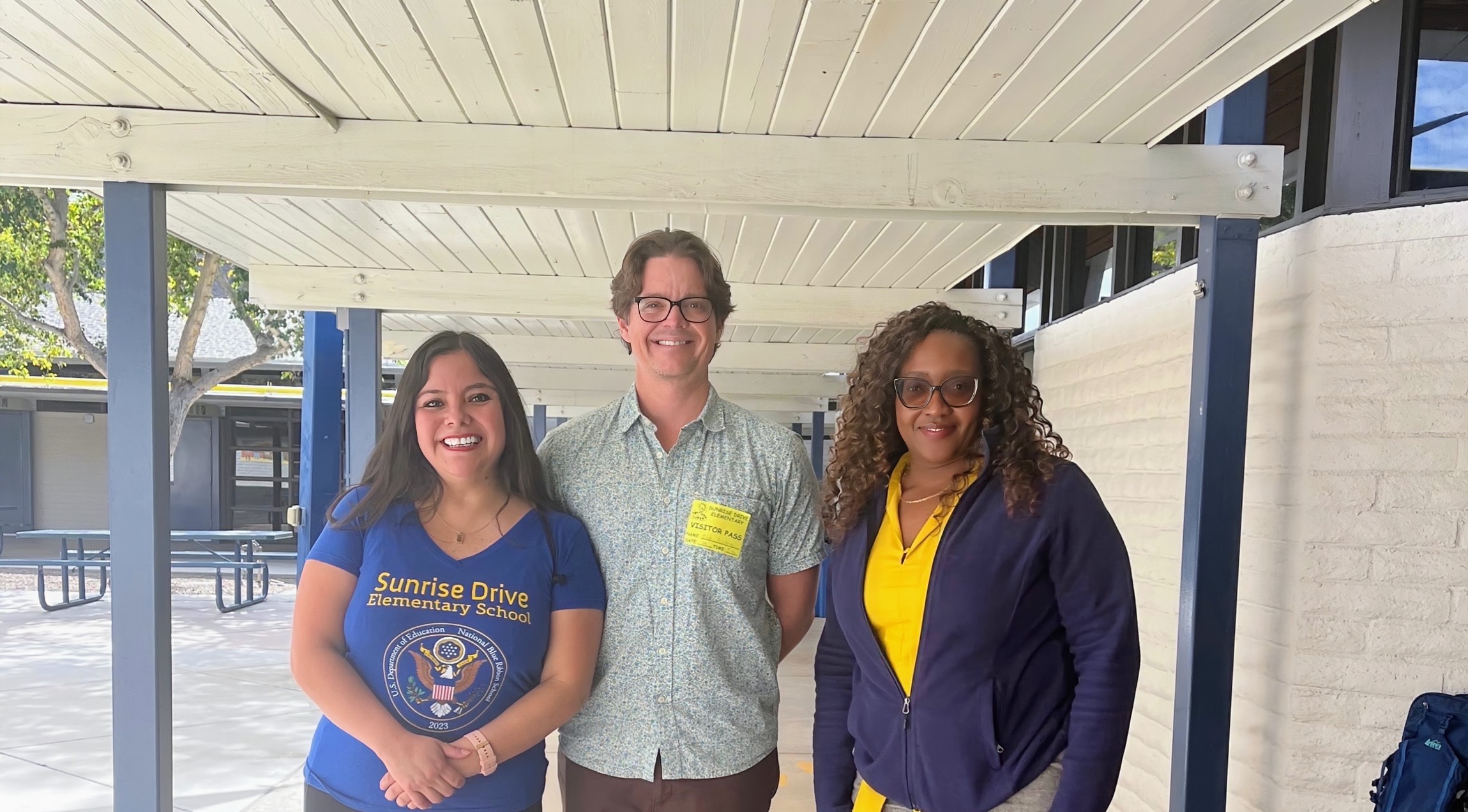 Samira Jean-Louis (right), Paloma Lazaro (left), and Mitchell Zischke (center)
 "On a more global level, the hope after 6 years is not only to give back to the community but to also allow every child—irrespective of their background—to have a front row seat to innovation, to see real 'Scientists' in action and hopefully choose such a career path later on, and foster a community of kids that understands science and are equipped to handle challenges that are sure to come," Dr. Jean-Louis shared.
"Overall, I believe that there is value in scientific diversity as exposing children to a broad spectrum of scientific disciplines—from the macro (astronomy) to the micro (molecular biology)—is vital for their development," she explained.
A Community Effort
Science Day succeeded because of an extraordinary collaboration between Sunrise Drive families, University of Arizona departments and students, local professionals, and community organizations. More than 20 presenters donated their time, expertise, and enthusiasm to inspire the next generation of scientists, engineers, doctors, and curious thinkers.
Thank you to:
Planning Team: Samira Jean-Louis, Paloma Lazaro, and Mitchell Zischke
Presenters: AZ Project WET • Alberto Arviso (U of A Veterinary Medicine) • April Madison & Cuyler Diggs (KGUN9 Meteorology) • Entomology – Native Bees & Species • Dr. Sutapa Dube & Dana Princiotta (Psychiatry) • Bernie (Astronomy/Stargazing) • Dr. Nancy Chen (Pediatrics Mini Doctor Exam Zone) • SARA Rocketry • Lindsey Bunting (Environmental Science) • Jamie Carpenter (Tucson Electric Power) • U of A Fish Museum • Karen Wilhemsen (Pima County Environmental Quality) • Hatcher & Bryant (U of A Collar Scholar Club) • Ryan Ruboyianes (U of A Biology) • Jenna Souvlie (Molecular Biology) • Chris Earnest & Paloma Lazaro (Mining & Geological Engineering – Caterpillar) • Alan Cervantes-Perez (Genetics) • Kyle Everly (Copper Smelting) • Ms. Ackerman (Robotics)
Thank you to Sunrise Drive Elementary and Principal Andrea Davidson for creating these hands-on learning experiences.
|
|
|